Content marketing is useful articles, guides and videos that earn a customer's attention over months. Performance marketing is paid advertising where you pay when someone clicks, signs up or buys. One builds slowly and keeps paying. The other is quick and stops when the money does.
In short: Content marketing builds trust slowly and keeps working. Performance marketing buys fast, measurable actions and stops when the budget does. Most small teams need one first, then the other.
Shopping for marketing means a pile of labels: inbound, outbound, digital, paid, organic. Here's what you'd actually be buying.
What marketing covers
The American Marketing Association calls marketing "the activity, set of institutions, and processes for creating, communicating, delivering, and exchanging offerings that have value for customers, clients, partners, and society at large". In practice, when someone sells you marketing, they mean one of a few ways to reach people. Here's what each looks like.
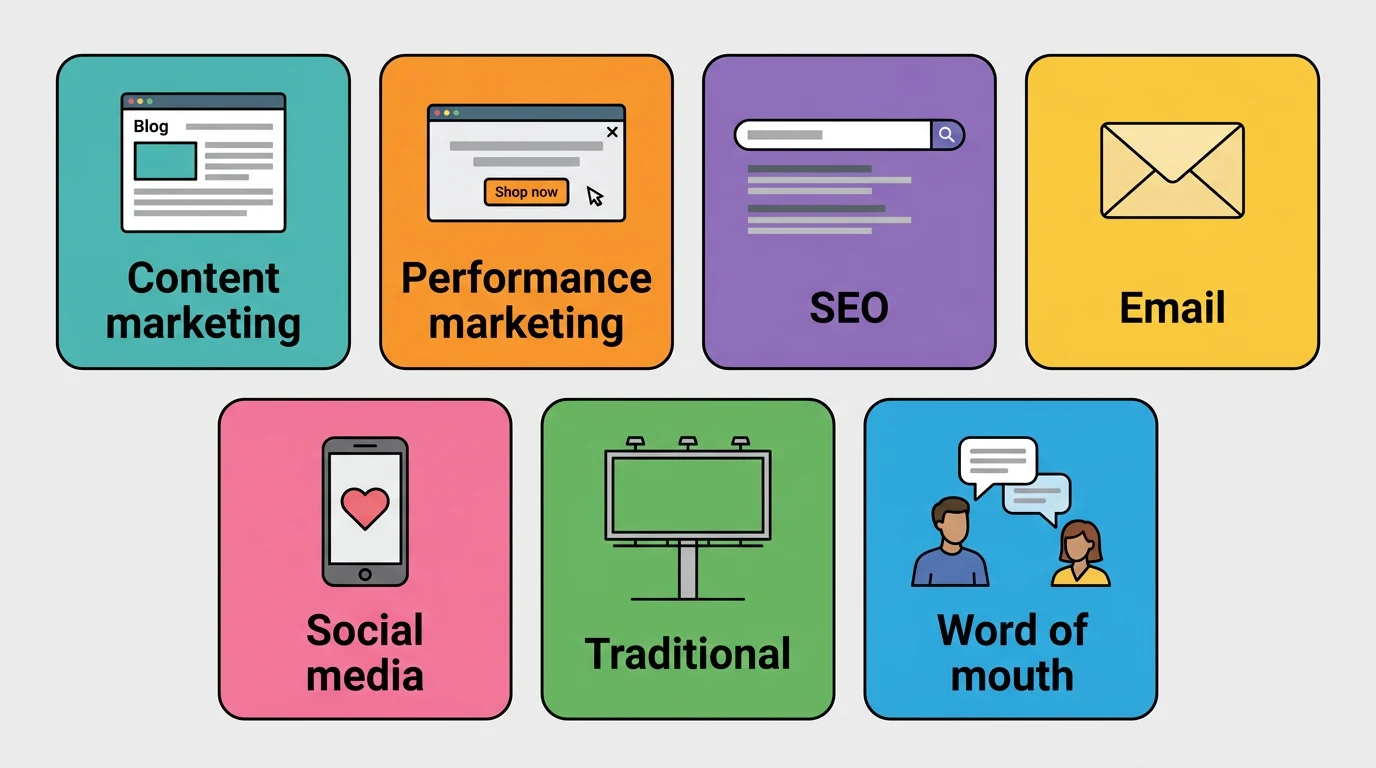
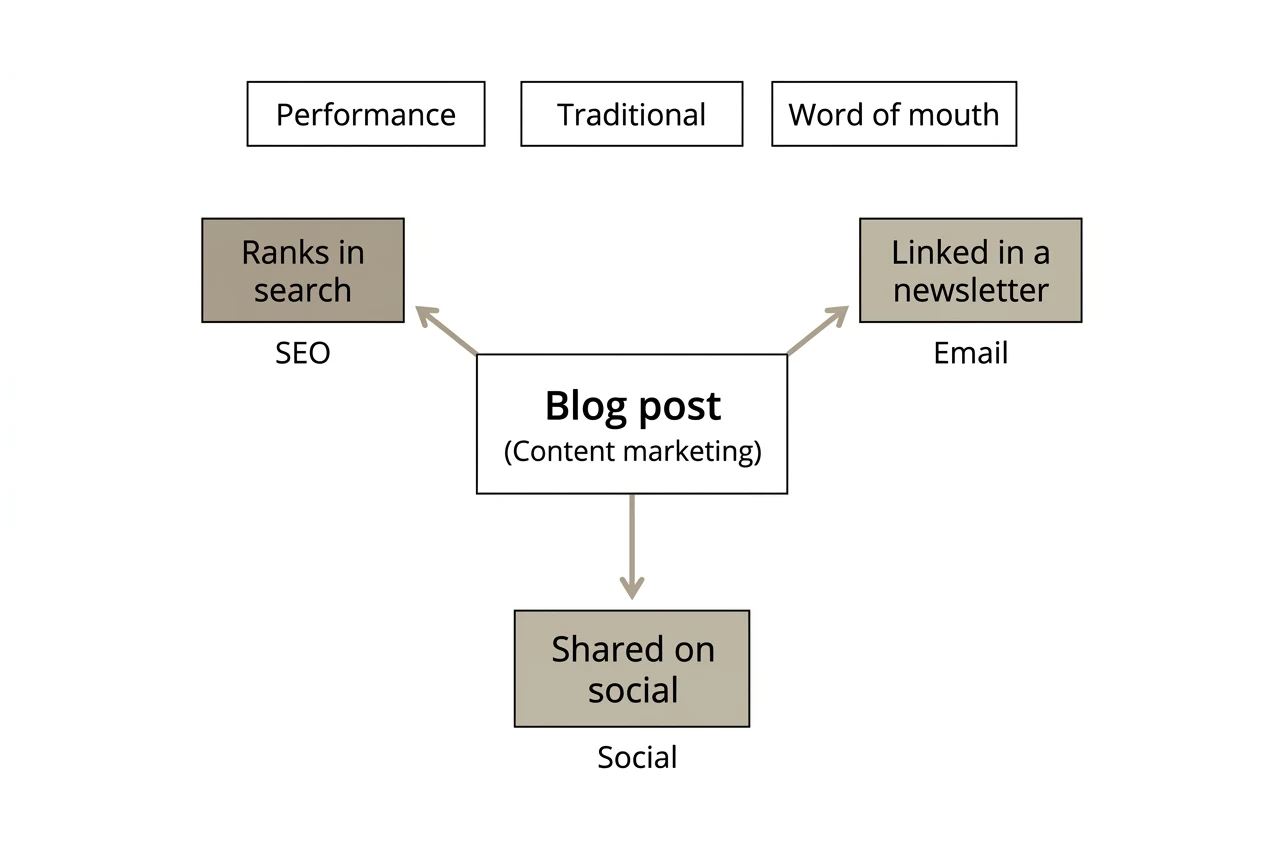
These overlap. A blog post is content marketing, and if it ranks in search that's SEO, and if you link it in a newsletter that's email. So the useful question isn't which label is right. It's which job you want done first.
How content marketing is different from performance marketing
The Content Marketing Institute defines content marketing as "a strategic marketing approach focused on creating and distributing valuable, relevant, and consistent content to attract and retain a clearly defined audience", with the aim of driving profitable customer action. You help first. The sale comes after trust.
Performance marketing works the other way round. Wikipedia describes it as advertising where the buyer pays only when there are measurable results. The usual pricing models are cost per click, cost per lead and cost per acquisition. You're charged per click, or per sign-up, or per sale. You can see what a lead costs.
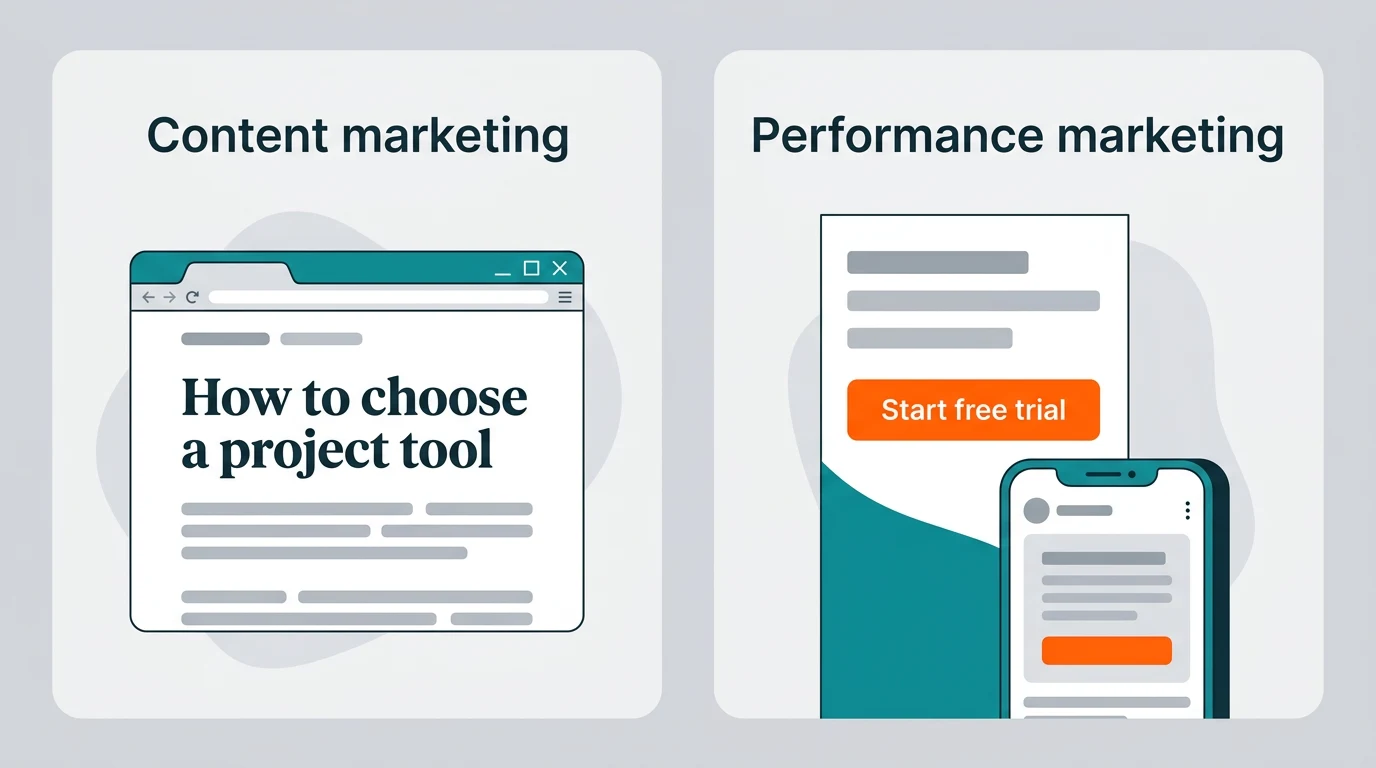
That one difference, who carries the risk and when, explains most of the rest.
| Content marketing | Performance marketing | |
|---|---|---|
| Main goal | Be the answer people find and trust | Get a specific action: a click, lead or sale |
| How it pays off | Slowly, and it can keep going | Quickly, and only while you spend |
| What stops it | Nothing, unless the content goes stale | The budget running out |
| Easiest thing to count | Visits, subscribers, enquiries | Cost per click, lead or sale |
| Hardest thing to count | Which post led to which sale | Whether the buyer would have come anyway |
How slow is slow?
For content that people find through search, slower than most owners expect. Ahrefs looked at one million random URLs from September 2023 and two million created in October 2023. Only 1.74% of newly published pages reached Google's top 10 within a year. The average page ranking first was five years old.
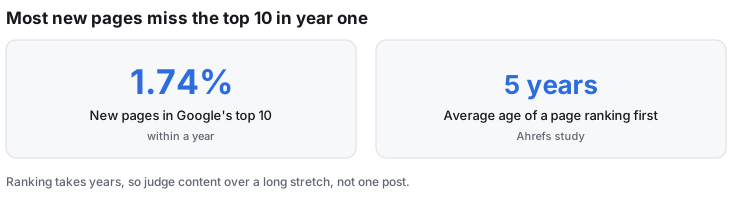
Don't wait on one post. Nobody can promise you a rank, and anyone who does is guessing.
What the research says about content marketing results
The Content Marketing Institute and MarketingProfs surveyed 1,015 B2B marketers, mostly in North America, between 24 June and 14 August 2025. 97% had a content strategy. Only 12% called their marketing highly effective over the last 12 months, and 33% said measuring content effectiveness was a challenge.
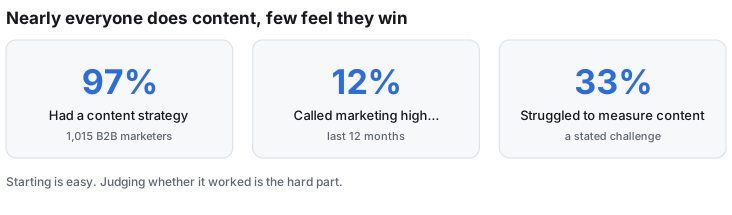
Nearly everyone does it and few feel they're winning. My reading: content is easy to start and hard to judge. Pick one number to look at every month before you begin. The survey is B2B only.
When to choose content marketing, performance marketing or both
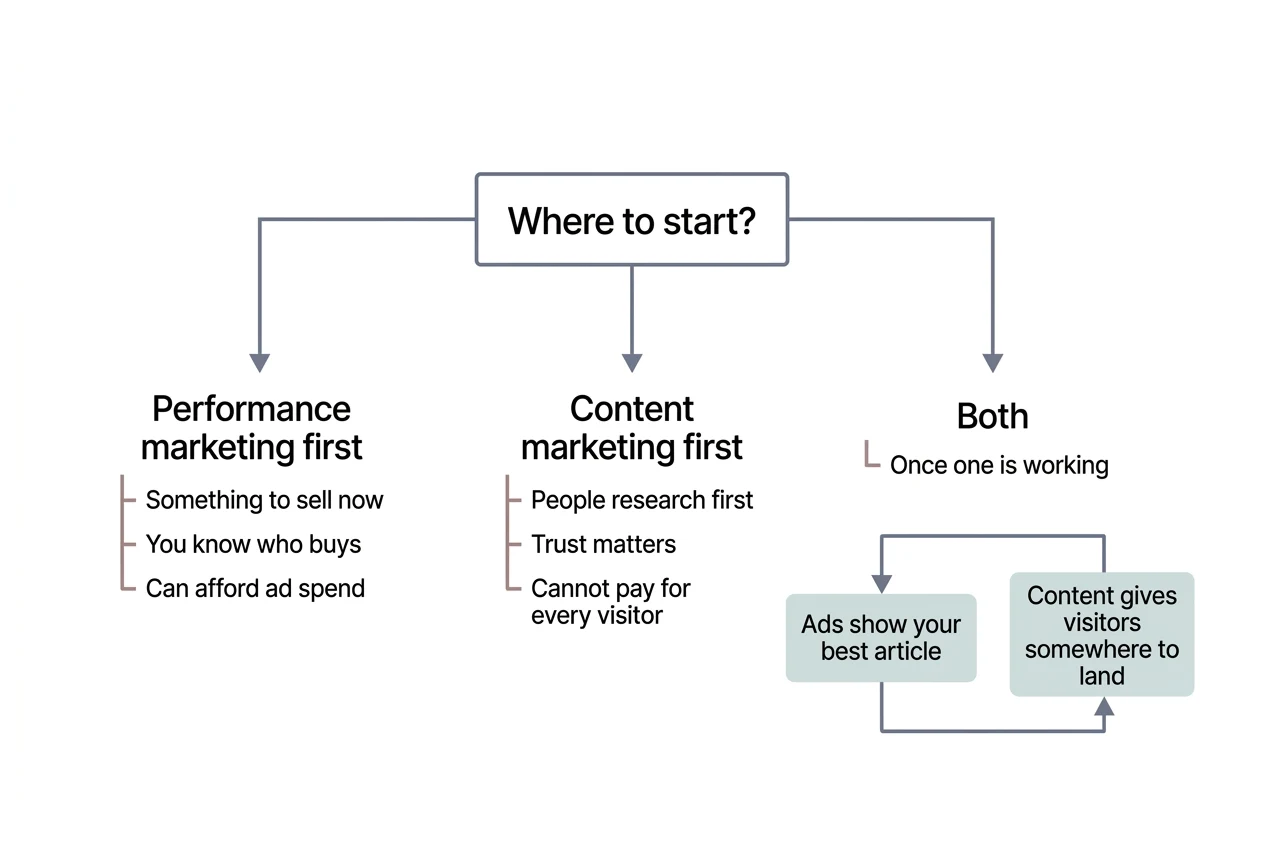
Choose performance marketing first if:
- you have something to sell now and a deadline, like a launch;
- you already know who buys and roughly what they'll pay;
- you can afford to spend on ads before you know what a customer costs.
Choose content marketing first if:
- people research before they buy, so there's a stream of questions to answer;
- trust matters, because the purchase is large or risky;
- you can't keep paying for every visitor.
Choose both once one is working. Ads show your best article to the right people on day one, and the article gives them somewhere useful to land.
Starting content marketing without an agency
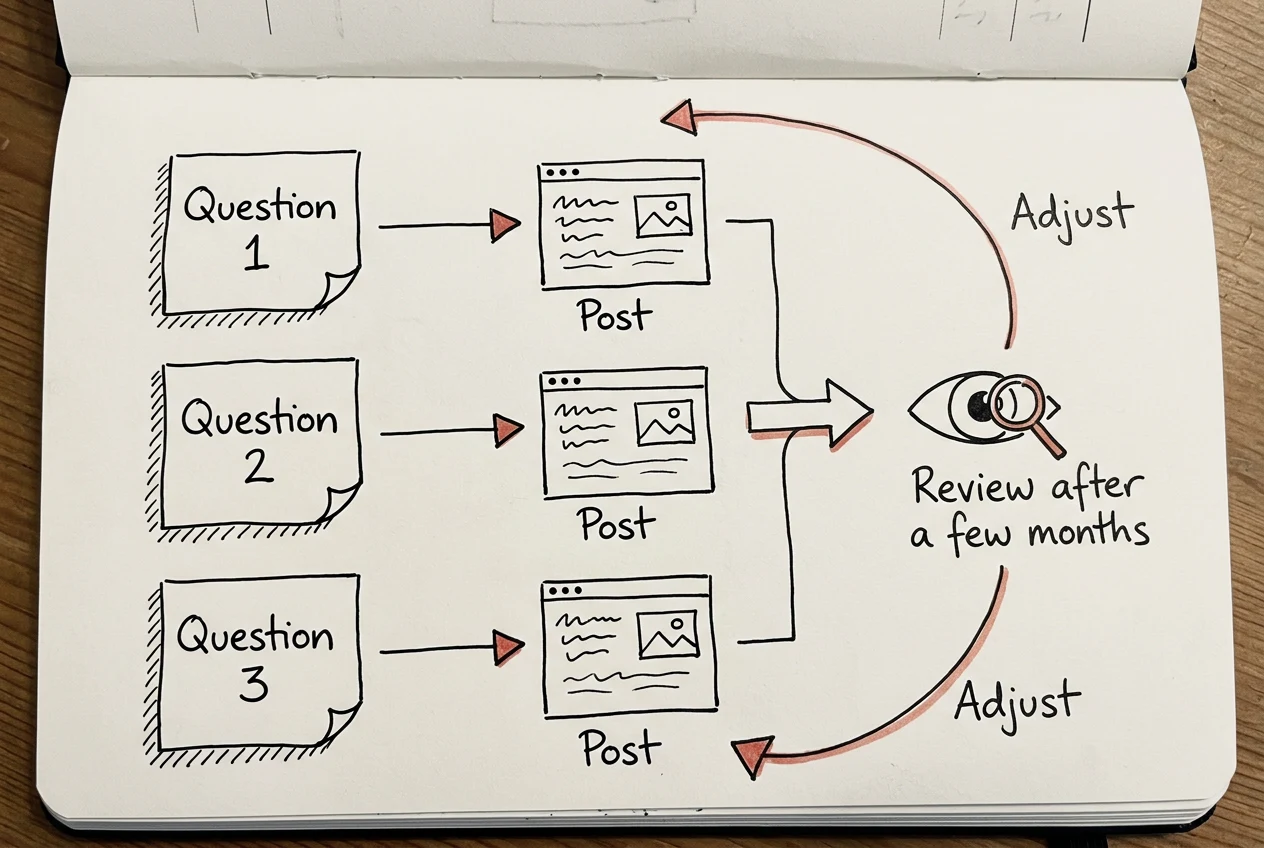
You don't need a retainer to begin. Pick the three questions customers ask you most often and write one clear post for each. The content writing samples show the shape a post can take.
Agency costs, and what to ask them, are in content marketing agencies and services.
I write for blogwriter.pro, so weigh this paragraph accordingly. It's a Mac app (macOS 11 or later) that drafts blog posts, and that's one slice of content marketing. It runs no ads, so it does nothing for the performance side.