Content writing courses are worth paying for only when they make you write, and someone marks it. Below are six checks to run on any course before you enrol, what a course can't give you, and a free test that takes an afternoon.
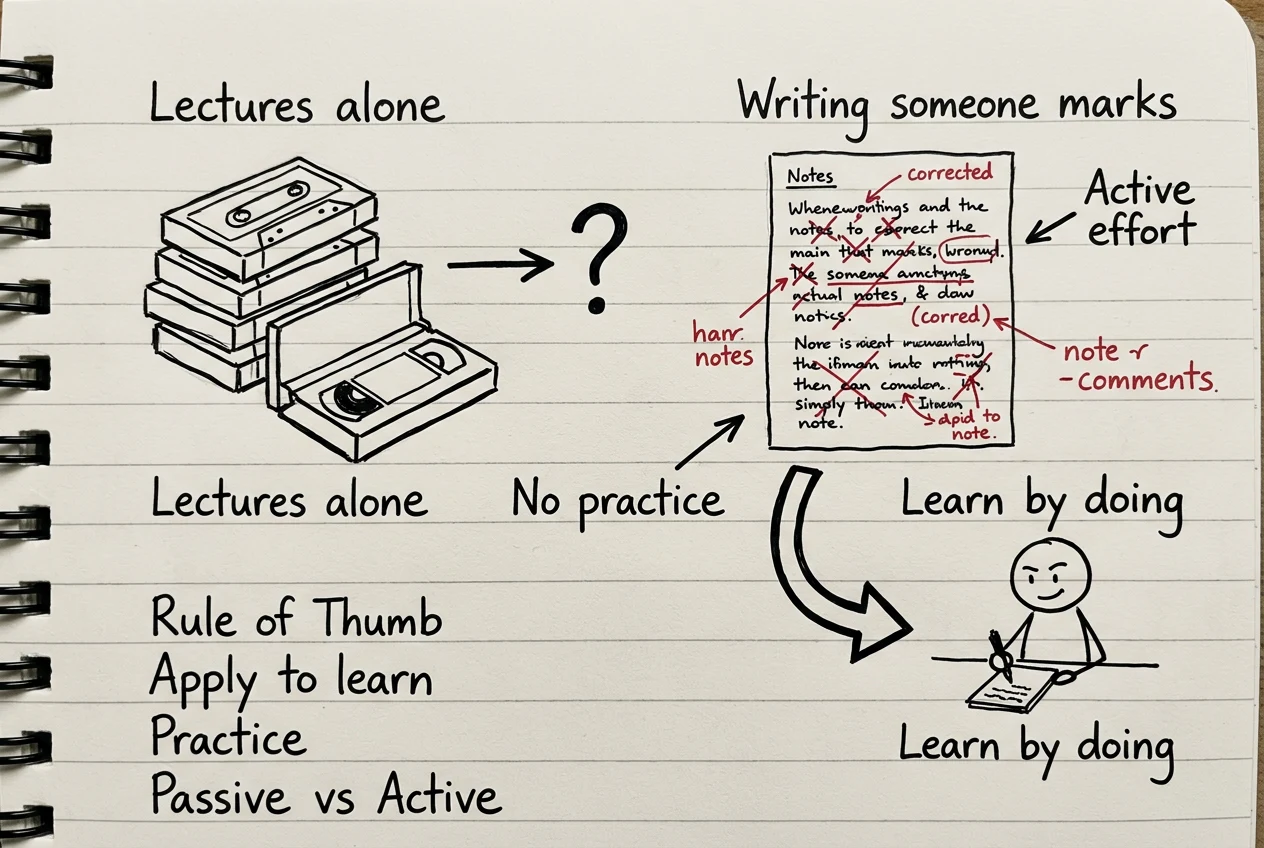
In short: A good course gives you graded practice, a real reader to write for, and edits on your own drafts. Lectures alone don't teach this. Check the sample lesson, ask who marks the work, and write one piece before you pay.
I write for blogwriter.pro, which makes a blog-writing app. I don't sell a course, and I name no course as "the best" below. I couldn't verify the prices and lengths that review sites give, because they disagree with each other. So this post is about how to judge a course, not a ranking.
What you are actually buying
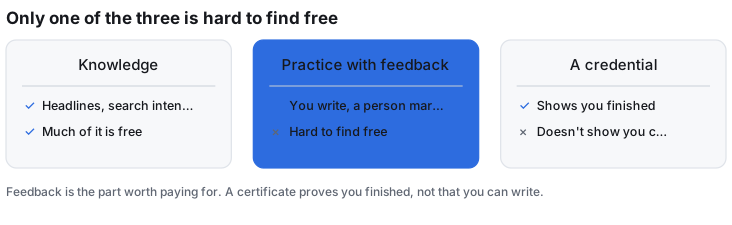
A course sells you one of three things, and they are not the same.
- Knowledge. How headlines work, what search intent is, how to structure a post. You can get much of this free.
- Practice with feedback. You write, and a person tells you what is weak. This is the part that is hard to find free.
- A credential. A certificate you can put on a profile. It tells a client you finished. It doesn't tell them you can write.
Decide which one you need. If you only want to know how posts are built, a free course or an afternoon with a few published posts may do, because the structure of a post is not a secret and you can see it on any page that ranks. If you want to be paid to write, feedback matters most. A client reads your writing. They never look at your certificate.
How people read, and why it shapes the course you pick
Jakob Nielsen's research for Nielsen Norman Group, published in September 1997, found that 79 percent of test users always scanned a new page, and only 16 percent read word by word. That study is old, and what it shows still holds in what you write: headings, short paragraphs and the answer first.
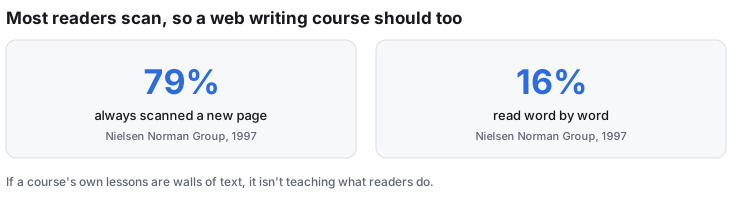
So a course on writing for the web should itself teach scannable writing and should show it. If the course's own lessons are dense walls of text, that tells you something.
Six checks for content writing courses
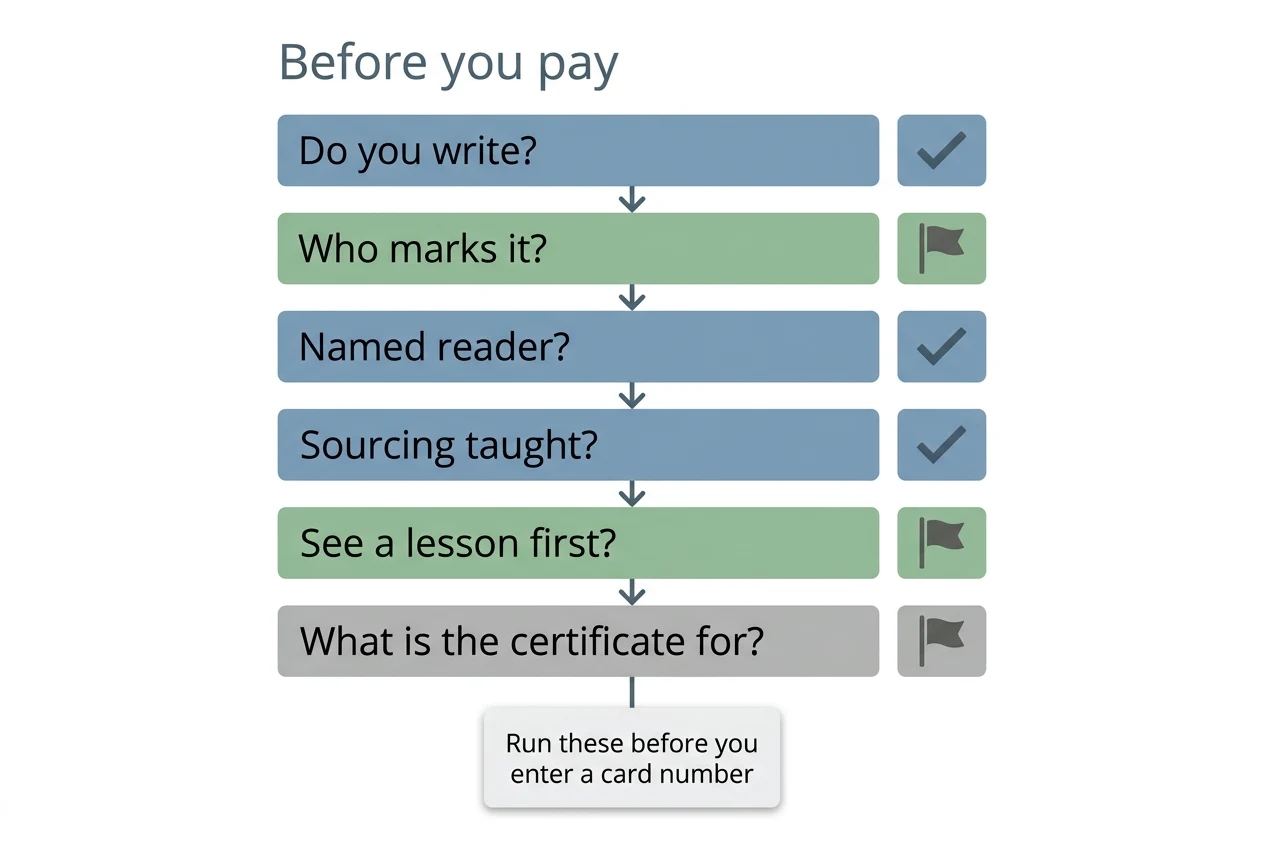
Run these before you enter a card number.
| Check | What a good answer looks like | A warning sign |
|---|---|---|
| 1. Do you write? | Graded assignments in every module | Videos and a multiple-choice quiz |
| 2. Who marks it? | A named person, with a stated turnaround | "Community feedback" with no one accountable |
| 3. Is there a named reader? | You write for a stated audience and goal | "Write about anything" |
| 4. Does it teach sourcing? | You cite sources and check figures | Facts taken from memory |
| 5. Can you see a lesson first? | A free sample or an audit option | Everything is behind payment |
| 6. What is the certificate for? | The course says honestly what it proves | It promises a job or income |
A few notes on each.
Do you write? Count the assignments. A course with eight hours of video and no writing is a lecture series. One example I could check: Coursera lists Content Strategy, offered by Simplilearn, as a beginner course of 8 hours in two 4-hour modules, with a shareable certificate. The page doesn't say what graded writing you submit. That is the kind of question to put to any course before you buy.
Who marks it? Feedback from a person who writes for a living is the one thing you can't get from a free video. Ask how long it takes. Ask how many drafts you can submit, and whether the same editor reads the second draft, because feedback that never sees your revision can't tell you whether you fixed the problem.
Is there a named reader? Writing improves when you know who it's for. A brief that names the reader, the goal and what to leave out beats "write 500 words on a topic of your choice."
Does it teach sourcing? Most weak content fails on facts: a number with no source, a claim from memory. Google's guidance on helpful, people-first content asks whether content shows first-hand expertise and depth of knowledge, and whether it is written or reviewed by someone who demonstrably knows the topic. A course that never makes you cite a source isn't teaching that.
Can you see a lesson first? Many platforms let you audit or preview. Use it. Read a lesson as if you'd already paid, and ask whether you'd bookmark it.
What is the certificate for? Treat it as proof of completion. Any course that promises you'll earn a certain amount, or land work, is guessing. Nobody can promise that for you, and I won't either.
Free or paid: how to decide
Free courses exist from software companies, and review sites list HubSpot's content marketing certification, Semrush Academy and Ahrefs Academy among them. I haven't been able to verify their current length or terms from the providers' own pages, so check each one yourself before you plan around it.
My rule of thumb:
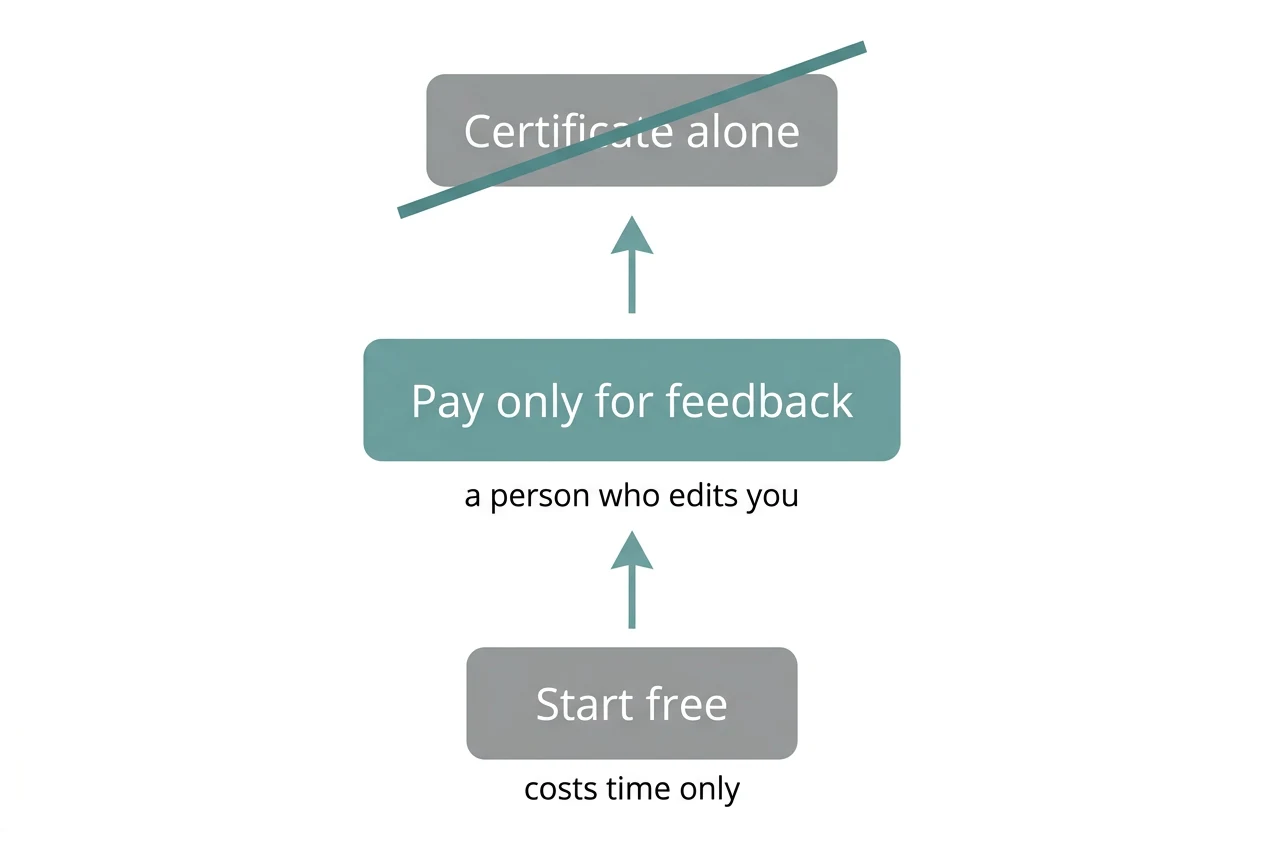
- Start free. Finish one free course. It costs you time only, and it tells you whether you like the work.
- Pay only for feedback. Once you know you want to write, the thing worth paying for is a person who edits you.
- Don't pay for a certificate alone. A client who hires writers reads a sample. They rarely ask for a certificate.
Free courses from software vendors teach their own tools and point of view. That isn't a flaw, but know it going in.
Test a course in one afternoon
Before you spend anything, run this test. It works on any course, free or paid.
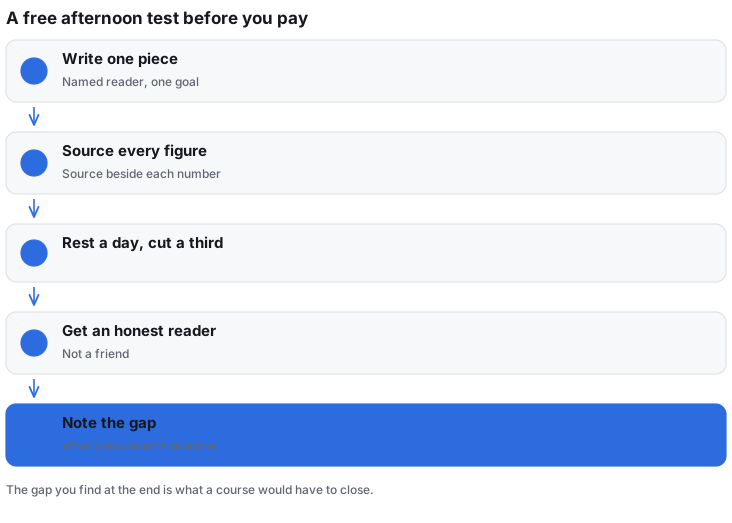
- Pick one lesson, free or sample, and write the piece it teaches, with a named reader and one goal.
- Source every figure and write the source next to it.
- Put the draft away for a day, then cut a third of it.
- Ask someone who isn't a friend to read it and tell you where they stopped.
- Note what you couldn't do without the course. That gap is what you'd be paying to close.
If you find that you didn't need the course, you've saved the fee. If you hit a wall at step 4, you now know what to look for in feedback.
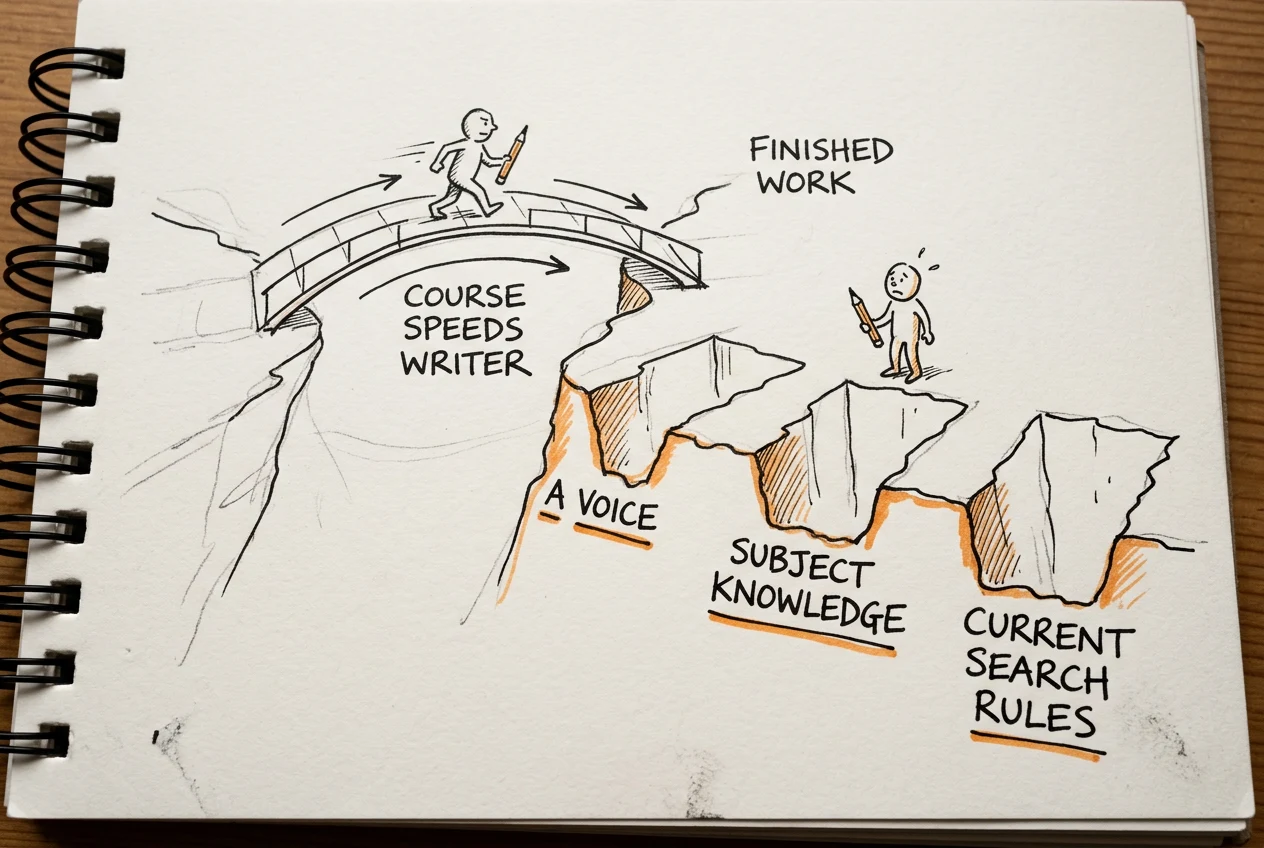
A course won't give you three things
A voice. You find it by writing a lot and cutting a lot. A course can speed this up. It can't do it for you.
Subject knowledge. A course on content writing teaches the craft. It doesn't teach you tax law or fitness or software. For clients, you either learn their topic or you don't get hired for it.
Current search rules. Search changes, and course material ages. Google's guidance asks whether automation, including AI, is disclosed where readers would expect it. Check any course's material against pages like that one, not the other way round.
Where practice meets a tool
I'd pair any course with real, small, published work. A personal blog does for this. The post on content writing samples has eight formats with fill-in templates you can practise on, and the blog writing format post covers the order of a post's parts.
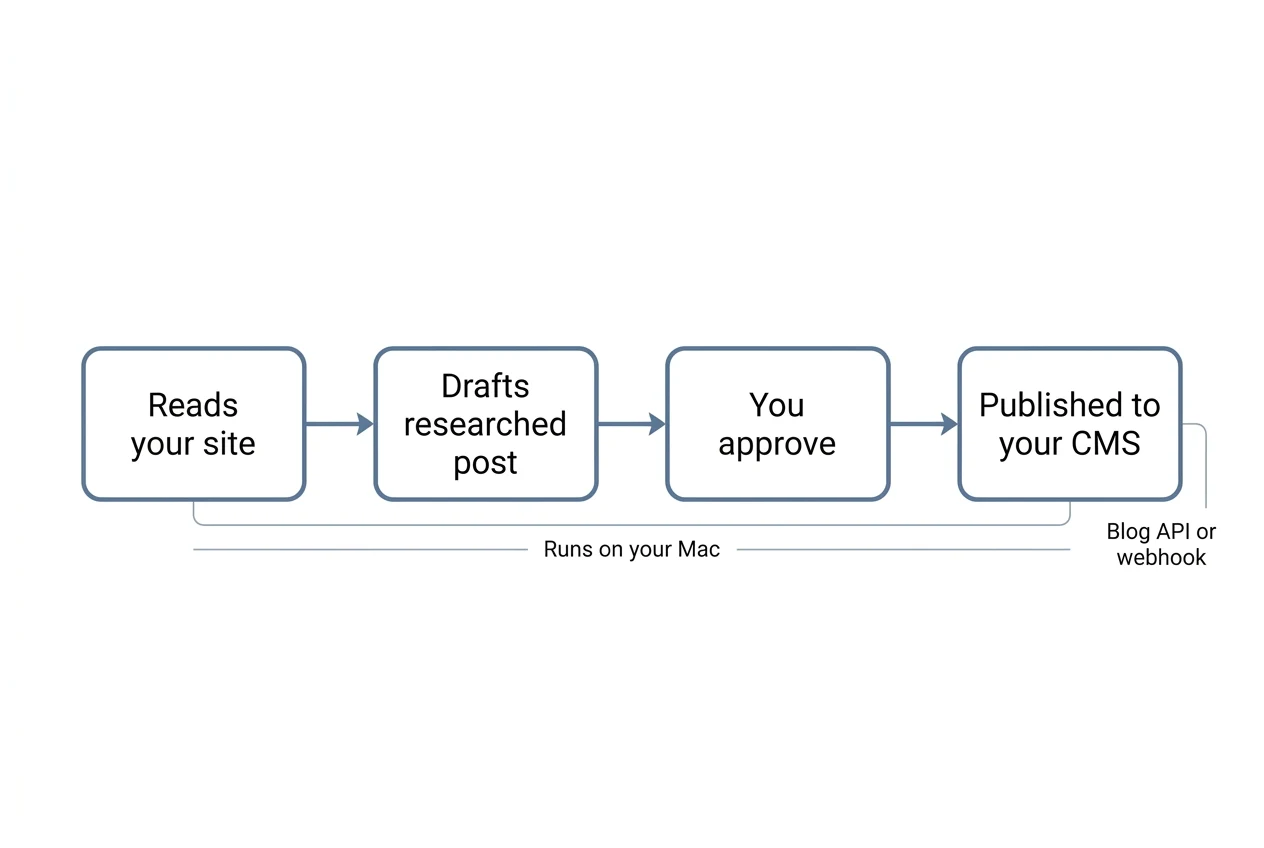
If your job is to keep a business blog going, rather than to become a freelance writer, a course may not be the answer at all. Hiring SEO blog writing services or content marketing agencies is the other route. blogwriter is a Mac app that reads your site first, then drafts researched posts for you to approve. It runs on your own Mac through your Claude subscription, and your CMS needs the Blog API or a webhook. Every plan starts with five free posts and no card. I'm on the seller's side, so judge it by those five.
FAQ
Are content writing courses worth it?
They are worth it when they include writing that someone marks. Lectures alone rarely change how you write. Use the six checks above, and write one piece first to see what you'd be paying to learn.
Can I learn content writing for free?
You can learn much of the craft free: free courses from software companies, published posts you can take apart, and your own practice. What's harder to get free is detailed feedback from an editor.
Do I need a certificate to get content writing work?
Usually a writing sample does more than a certificate. A certificate shows you finished a course, and a sample shows a client what you can do.
How long does it take to learn content writing?
That depends on how often you write. A beginner course can be a few hours, such as the 8-hour Coursera course above, but skill comes from the writing you do afterwards, not from the hours of video.
Start with the free test
Pick one lesson, write the piece, source every figure, cut a third and get one honest reader. Then decide whether to pay, and for what.